
 Are Vapes Worse Than Cigarettes?
If you have ever wondered “Are vapes worse than cigarettes?”, you are not alone. With vaping becoming increasingly common, many people want to understand how vaping compares with traditional smoking and whether switching from cigarettes to a vape can reduce the risks associated with smoking.
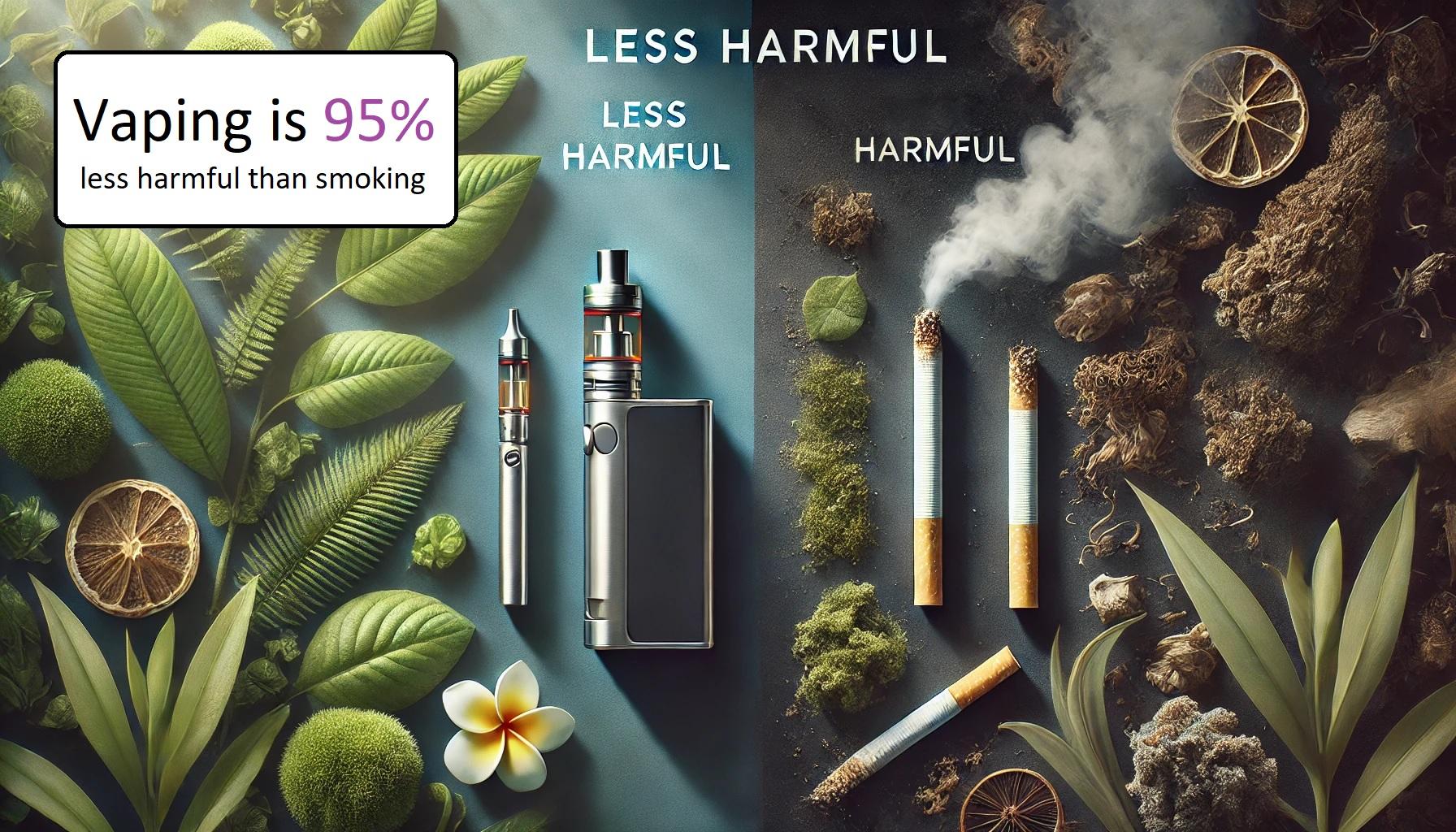
The short answer is that vaping is not risk-free, but current evidence indicates that vaping is less harmful than smoking cigarettes.
The important distinction is that cigarettes burn tobacco, while vapes heat an e-liquid to create an aerosol. This difference significantly changes the substances a user is exposed to.
Let’s take a closer look.
Vaping vs Smoking: What Is the Difference?
The biggest difference between cigarettes and vapes is combustion.
When a cigarette is smoked, tobacco is burned. This combustion produces thousands of chemicals, many of which are toxic. Cigarette smoke also contains tar and carbon monoxide, two of the substances strongly associated with the serious health effects of smoking.
Vapes do not burn tobacco. Instead, an electronic device heats an e-liquid to produce an aerosol that is inhaled.
Because there is no tobacco combustion, vaping generally exposes users to fewer harmful chemicals and at lower levels than smoking cigarettes. The NHS states that vaping poses only a small fraction of the risks associated with smoking in the short and medium term.
Are Vapes Safer Than Cigarettes?
Based on the evidence currently available, yes, vaping is considered less harmful than smoking cigarettes.
However, “less harmful” does not mean “harmless”.
Vaping can expose users to nicotine and other substances, and researchers are still studying the long-term health effects of regular vaping. The CDC states that there are no safe tobacco products, including e-cigarettes, and that more research is needed to fully understand the short- and long-term effects of vaping.
For someone who does not smoke, starting to vape is therefore not considered a healthy choice.
For an adult who already smokes cigarettes, however, switching completely from smoking to vaping can substantially reduce exposure to many harmful substances found in cigarette smoke.
Why Are Cigarettes More Harmful?
The main reason cigarettes are so harmful is the combustion of tobacco.
Burning tobacco produces a complex mixture of chemicals that can damage the lungs, cardiovascular system and other parts of the body.
Cigarette smoke contains thousands of chemicals, including many toxic substances and numerous chemicals known to cause cancer.
Vaping does not involve burning tobacco and therefore does not produce cigarette smoke.
According to the NHS, most of the harmful chemicals in cigarette smoke, including tar and carbon monoxide, are not present in vape aerosol.
This does not make vaping harmless, but it helps explain why the risk profile is different.
Does Vaping Contain Nicotine?
Many vapes contain nicotine.
Nicotine is highly addictive, which means regular use can lead to dependence. However, nicotine is not responsible for most of the cancer and lung damage associated with cigarette smoking.
Much of the serious harm from smoking comes from the toxic chemicals produced when tobacco is burned.
This is an important distinction when comparing cigarettes with nicotine-containing vapes.
What About the Chemicals in Vape Aerosol?
Vape aerosol is not simply harmless water vapour.
Depending on the product, it can contain nicotine, flavouring substances and other chemicals. The exact composition can vary between devices and e-liquids.
However, evidence indicates that exposure to harmful chemicals is generally considerably lower with vaping than with smoking cigarettes.
This is one of the main reasons public health organisations distinguish vaping from smoking rather than treating the two as equally harmful.
Is Vaping Better Than Smoking If You Already Smoke?
For an adult who currently smokes, completely switching from cigarettes to vaping is likely to be less harmful than continuing to smoke.
The key word here is completely.
Continuing to smoke cigarettes while also vaping is known as dual use. This does not provide the same potential reduction in harm as completely replacing cigarettes with vaping.
The CDC specifically notes that dual use is not an effective way to safeguard health, while completely replacing smoked tobacco products with e-cigarettes may have potential benefits for adults who smoke.
If someone switches to vaping but continues smoking cigarettes regularly, they may continue to be exposed to many of the harmful chemicals associated with tobacco combustion.
Can Vaping Help People Quit Smoking?
There is growing evidence that nicotine-containing e-cigarettes can help some adults stop smoking.
A 2026 Cochrane review found high-certainty evidence that nicotine e-cigarettes increase smoking cessation rates compared with traditional nicotine replacement therapy such as patches or gum. The review included evidence from tens of thousands of adults who smoke.
This does not mean vaping is suitable for everyone, and it does not mean that non-smokers should start vaping.
Rather, the evidence suggests that vaping can be an effective smoking-cessation tool for some adults who already smoke.
Is Vaping Completely Safe?
No.
This is an important point.
Vaping is not harmless, and researchers are still learning about its long-term effects.
Current evidence suggests that vaping exposes users to fewer and lower levels of harmful substances than cigarette smoking. However, vaping can still expose the lungs and body to potentially harmful substances, and nicotine can cause dependence.
Therefore, the healthiest option is not to smoke or vape.
But when comparing the two products specifically, the available evidence does not support the idea that vaping is more harmful than smoking cigarettes.
Vaping vs Cigarettes: A Simple Comparison
| Feature | Cigarettes | Vapes |
|---|---|---|
| Burns tobacco | Yes | No |
| Produces cigarette smoke | Yes | No |
| Contains nicotine | Usually | Often |
| Produces tar | Yes | No tobacco combustion |
| Produces carbon monoxide | Yes | No |
| Can cause nicotine dependence | Yes | Yes, when nicotine is present |
| Completely risk-free | No | No |
| Relative harm | Very high | Lower than smoking |
The table highlights the most important difference: cigarettes rely on burning tobacco, while vapes heat an e-liquid instead.
So, Are Vapes Worse Than Cigarettes?
Based on current evidence, no — vaping is not considered more harmful than smoking cigarettes.
For people who do not smoke, there is no health benefit to starting vaping, and non-smokers should not take up vaping.
For adults who already smoke, however, completely switching from cigarettes to vaping can significantly reduce exposure to the toxic chemicals produced by burning tobacco.
Vaping should therefore be viewed in the context of relative risk:
Not smoking or vaping is the lowest-risk option.
Vaping is less harmful than smoking cigarettes.
Continuing to smoke cigarettes carries the greatest risk.
The Bottom Line
The question “Are vapes worse than cigarettes?” has a relatively clear answer based on the evidence currently available.
Vaping is not harmless, but it is generally considered substantially less harmful than smoking cigarettes.
The primary reason is that cigarettes burn tobacco and produce thousands of chemicals, including many toxic substances, tar and carbon monoxide. Vapes do not burn tobacco and generally expose users to fewer harmful chemicals and at lower levels.
For smokers who are unable or unwilling to quit nicotine immediately, switching completely from cigarettes to vaping may reduce their exposure to many of the harmful substances associated with smoking.
However, non-smokers should not start vaping, and people who vape should be aware that the long-term health effects are still being studied.
The ultimate goal for anyone who uses nicotine should be to move towards a smoke-free and, eventually, nicotine-free lifestyle.